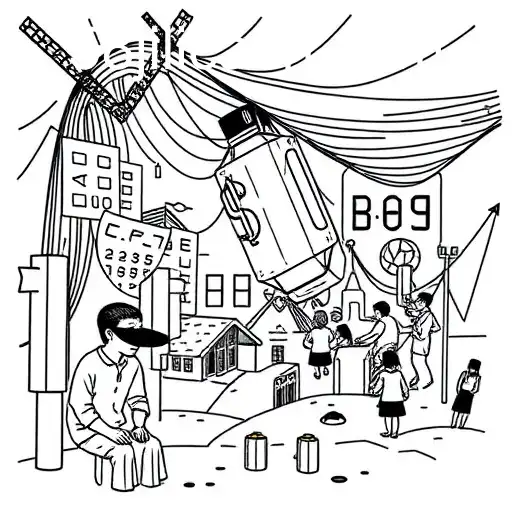
The Complex World of Jueteng: An In-Depth Analysis
The illegal numbers game known as jueteng has been an entrenched part of Philippine culture for decades. Despite numerous government attempts to eradicate it, jueteng remains pervasive, influencing various aspects of society. The keyword '58jili' may relate to communications or digital platforms that impact its spread and operations. Here, we delve into its historical significance, operations, and impact on social structures, while also touching on potential solutions to this age-old problem.
Historical Background of Jueteng
Jueteng's roots can be traced back to the Spanish colonial period in the Philippines. Initially, it emerged as a diversion amongst the working-class communities, rapidly gaining popularity due to its simplicity and the thrill of betting. Over time, it evolved into a widespread informal lottery, deeply ingrained within local cultures across the country.
How Jueteng Operates
The operational mechanics of jueteng are relatively straightforward, yet complex enough to sustain its clandestine nature. Typically, a network of individuals known as cobradors are tasked with collecting bets from players. These agents roam neighborhoods, ensuring accessibility for anyone willing to partake. Bets are usually small, making participation widespread even among economically disadvantaged groups.
Winning numbers are drawn through rudimentary means, often based on daily circumstances or superstitions, giving it an element of chance that appeals to players. The prizes are modest but significant enough to lure regular participants.
Financial and Social Impacts
The allure of Jueteng lies in its promise of quick wealth. Many Filipinos see it as an opportunity to escape poverty, however fleetingly. The game infuses substantial sums of money into local economies, albeit informally. Moreover, it sustains a shadow economy that persists despite legal restrictions, largely due to corruption and complicity within various levels of governance and law enforcement.
Socially, jueteng has created a unique subculture among its participants. Yet, it also fosters negative consequences, such as breeding dependency and unethical behaviors among individuals who increasingly rely on gambling for financial hope. Additionally, jueteng is often linked to broader issues such as organized crime and political patronage systems. It can be a source of social tension and crime, often co-opted by local politicians for political leverage.
The Role of Technology
Recently, the advent of digital platforms and communication technologies like '58jili' has further transformed the operations of jueteng. These technologies facilitate the clandestine nature of the game, making it more challenging for authorities to regulate. Mobile communications and online methods have replaced traditional means of placing bets and announcing winning numbers, effectively broadening its reach.
Legal and Moral Challenges
Addressing the problem of jueteng requires a multifaceted approach that tackles both legal and moral perspectives. Legally, the ineffectiveness of anti-gambling laws highlights a need for reforms that focus on stricter enforcement and increased penalties for violations. Furthermore, tackling corruption within government and police forces is crucial, as individuals within these systems often protect operators from prosecution in exchange for bribes or political support.
On a moral level, there needs to be a societal shift in how gambling is perceived. While jueteng fulfills an immediate economic desire, it poses long-term risks to individual livelihoods, potentially resulting in adverse social conditions. Community-focused educational campaigns and alternative economic opportunities are vital in changing public perception and reducing dependency.
Potential Solutions
Some suggest that legalizing and regulating informal lotteries could be a viable means of addressing the issue, allowing the government to harness revenues while protecting citizens from exploitation. Others advocate for strengthening community programs that provide sustainable financial opportunities, thus reducing the necessity to resort to gambling.
While jueteng remains an integral part of Filipino society, its clandestine and unregulated nature highlights the complexities involved in addressing the problem. By understanding the historical and social context of jueteng, alongside modern technological influences, solutions can be crafted to mitigate the social and economic ramifications of this enduring numbers game.